 Bettertap™
Home
Hard water vs. filtered water at home
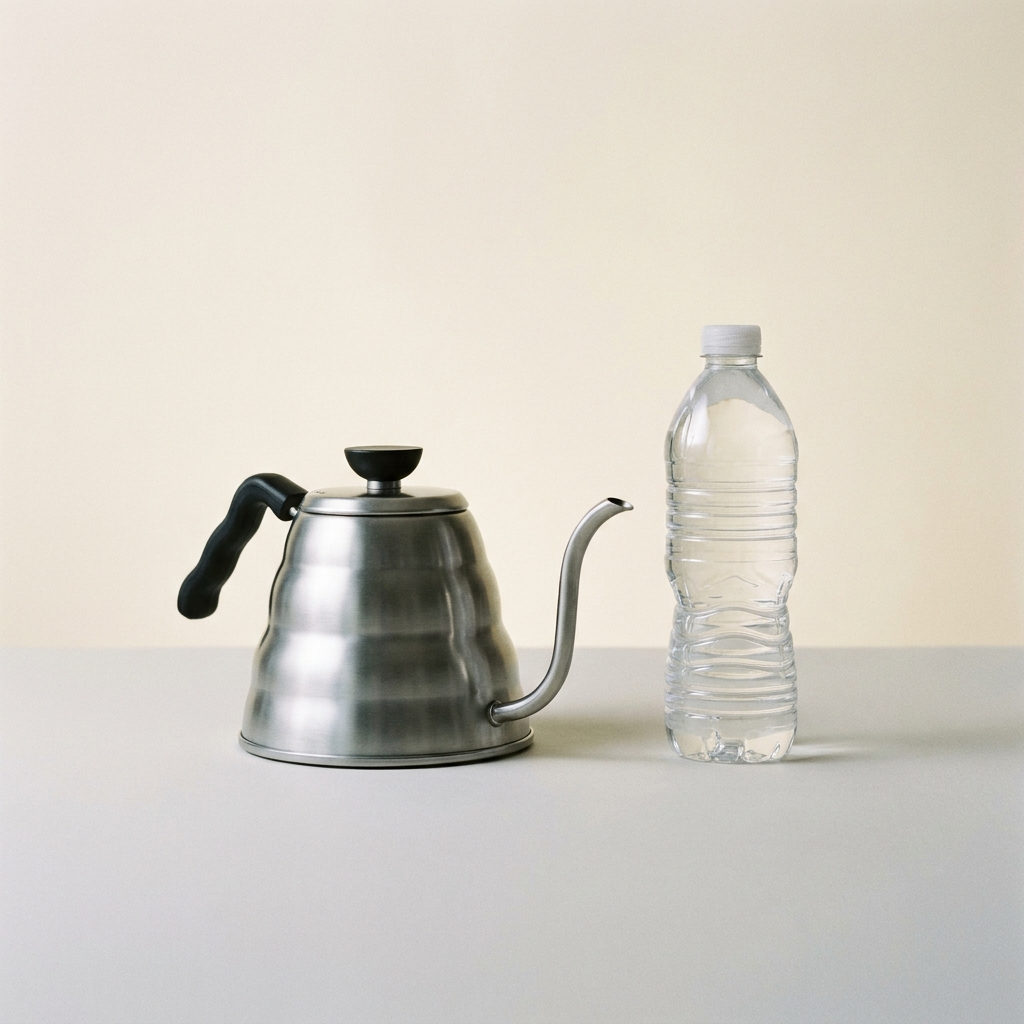
If your kettle wears a chalky crust and your glassware comes out of the dishwasher with a cloudy film, you already know hard water without ever reading a label. It is one of the most common quirks of home water, and it is worth understanding what it is — and what it is not.
What "hard" water means
Hardness simply refers to the amount of dissolved minerals, mainly calcium, magnesium and potassium, in your water. Hard water is not unsafe; those minerals are the same ones that give water a pleasant taste. The hardness just shows up in visible, everyday ways around the home.
The telltale signs
Hard water tends to announce itself:
- Limescale building up inside kettles, coffee makers and on faucets.
- Spots and cloudy film on glasses and shower doors.
- Ice cubes that freeze a little cloudy.
- Tea and coffee that taste flatter than you would like.
None of these are dangerous, but they are the daily friction that makes people start looking for better water.
Where filtration comes in
Filtration and softening solve different problems, and it helps to keep them straight. Filtration is about what you drink — reducing contaminants like lead and chlorine from the glass. Better Tap's MAZE filtration does that while keeping the healthy minerals, so the water still tastes clean and rounded rather than blank.
Better water, fewer chores
The everyday upside is clarity where it counts. Filtered water from Better Tap means cleaner-tasting tea and coffee, clearer ice and a single dispenser that retires the bottled-water cases and pitchers cluttering the counter. And because the system performs in both soft and hard-water homes, it fits whatever is already coming out of your tap. If you want to dig into specifics, our FAQ covers hard-water homes directly.