 Bettertap™
Water 101
What's really in your city tap water

Most city water in the United States is treated to be safe to drink, and that's worth saying clearly. But "safe to drink" and "the water you'd actively choose to drink" are two different standards. The first is a legal floor. The second is personal. This is an honest look at the gap between them.
Treated at the plant, then a long trip home
Your local utility cleans and disinfects water before it ever leaves the treatment facility. The complication is everything that happens afterward. Water can travel for miles through aging infrastructure and then through the plumbing inside your own home. Along the way it can pick up traces of metals, sediment and leftover disinfection byproducts. None of it is visible in the glass.
The handful worth knowing
A few names show up again and again in water-quality reports:
- Lead, which can enter through older service lines and household fixtures.
- Chlorine and the byproducts left behind by disinfection.
- Microplastics, plus trace pharmaceuticals and hormones.
These are usually present at low levels. Still, many households would simply rather not drink them at all, especially with young children at the table.
Why we keep the good parts
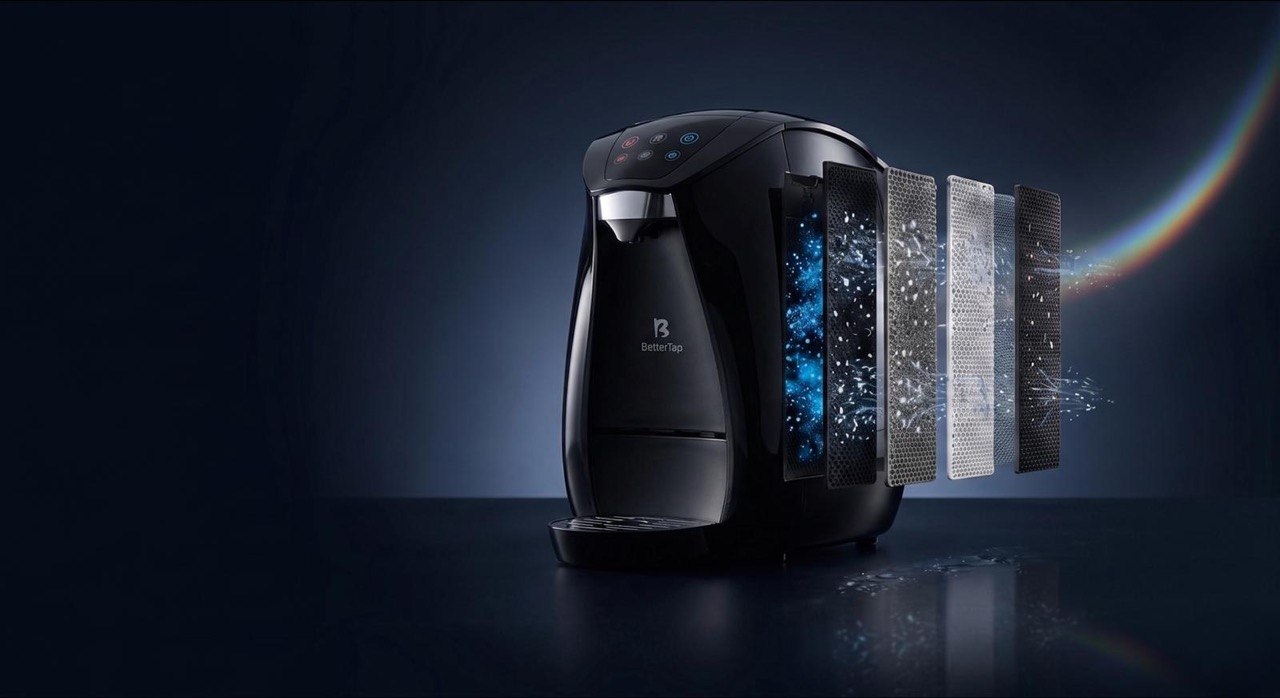
Here's where filtration gets interesting. Reverse-osmosis systems strip nearly everything out, including the calcium, magnesium and potassium that give water its clean, rounded taste. Better Tap's MAZE filtration is built to do the opposite: it reduces a range of contaminants while keeping those healthy minerals in place. You clarify the water without flattening it.
A simple next step
Start by reading your local water-quality report, then decide what you want from your own glass. If "reduce the harmful, keep the beneficial, and skip the bottled-water runs" sounds right, that's exactly the job Better Tap is built for.
Keep reading