 Bettertap™
Technology
UV-C light vs. chemical disinfection: a cleaner way to stay fresh
Keeping water free of microbes has always been a balancing act. For more than a century, the most common approach has been to add a disinfecting chemical. But there is another path that uses no additives at all — a short burst of ultraviolet light. Understanding both helps explain why so many modern systems are leaning toward light.
How chemical disinfection works
Chemical disinfection introduces a substance, most often a form of chlorine, that is hostile to bacteria and other organisms. It is effective and inexpensive, which is why municipal systems rely on it to keep water safe across miles of pipe. The trade-off is that the chemical lingers, and that residue is part of why tap water can carry a faint pool-like taste and smell.
How UV-C works
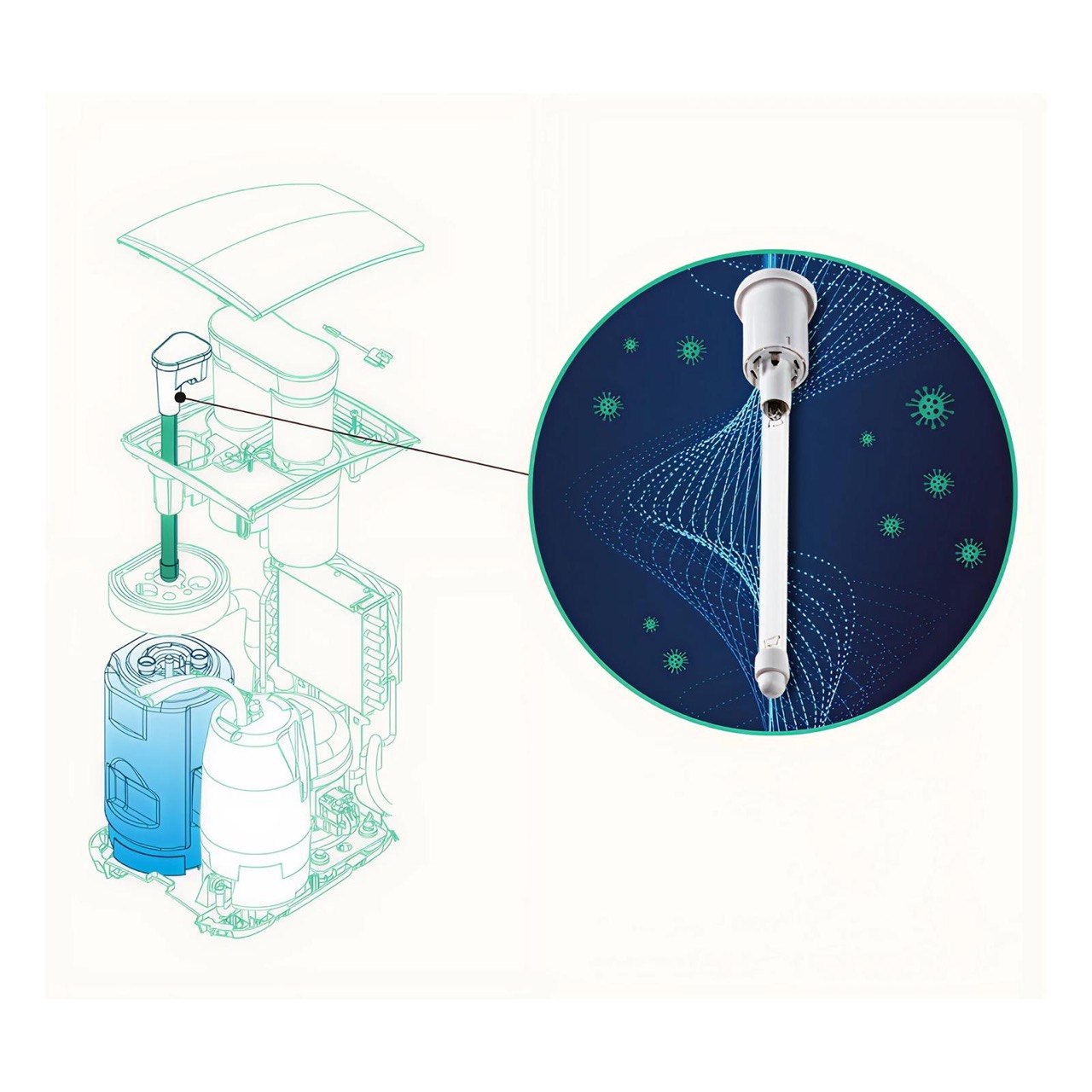
UV-C is a specific band of ultraviolet light. When microbes pass in front of it, the light disrupts their ability to multiply, neutralizing them without adding anything to the water. Nothing is left behind — no residue, no taste, no smell. It is a physical process rather than a chemical one.
What makes UV-C especially well suited to drinking water at home:
- It adds no chemicals and changes nothing about the taste.
- It works in seconds, right at the point of use.
- It leaves the water's healthy minerals completely untouched.
Why Better Tap chose light
Better Tap finishes every pour with a quiet burst of UV-C, working between servings to keep your water fresh without ever altering its taste or stripping its minerals. Paired with MAZE filtration — certified by NSF/ANSI 42, 53, 401, and 55 Class B — you get water that is both clarified and freshly guarded, with nothing added you didn't ask for.